Emergency Dentist Plano, TX for Severe Toothaches and Swelling

A severe toothache can turn an ordinary day into a miserable one in a matter of hours. Swelling raises the stakes even more. People often try to push through dental pain, especially when it starts late at night or on a weekend, but pain that throbs, spreads into the jaw, or comes with facial swelling is not something to shrug off. In practice, these symptoms usually mean there is inflammation deep inside the tooth, an infection around the root, or pressure Emergency dentist Plano, TX building in the surrounding tissues. None of those problems improve because someone grits their teeth and waits it out.
If you are looking for an Emergency dentist Plano, TX patients can call for urgent care, the key question is not only who can see you quickly, but who can accurately tell the difference between a problem that can wait a day and one that needs attention now. Severe toothaches and swelling sit near the top of that list. They can escalate fast, and the right care early often means less pain, lower treatment cost, and a better chance of saving the tooth.
Why severe toothaches deserve urgent attention
A bad toothache is not always caused by the same thing. That is one reason self-diagnosis tends to fail. One patient may have deep decay that has reached the nerve. Another may have a cracked tooth that only hurts when biting, until the crack opens enough to expose the pulp and suddenly the pain becomes sharp, constant, and impossible to ignore. Someone else may have gum swelling that seems minor, but the real issue is a dental abscess draining through the tissue.
What matters clinically is not just the level of pain, but the pattern. Pain that lingers after hot or cold, wakes you from sleep, worsens when you lie down, or radiates to the ear or temple often points to a more advanced problem. Swelling usually means the body is reacting to irritation or infection. At that point, the goal is not merely pain relief. The goal is to remove the source.
Many people are surprised to learn that antibiotics alone do not fix most dental infections. They may reduce the bacterial load for a short period, but if the infected pulp, abscess, or trapped debris remains in place, the problem often flares again. This is why an emergency dental visit focuses on diagnosis first, then targeted treatment, whether that means draining an abscess, opening the tooth to relieve pressure, performing a root canal, or removing a tooth that cannot be saved.
What swelling can tell a dentist
Swelling is one of the most important warning signs in emergency dentistry. A little puffiness in the gum near one tooth is very different from visible swelling in the cheek or under the jaw. The location, firmness, tenderness, and speed of onset all matter.
Localized swelling near a single tooth often comes from a dental abscess, especially if the area is tender and there is a bad taste or drainage. Diffuse swelling that affects the face can mean the infection has spread beyond the tooth itself. If a patient has trouble opening the mouth, swallowing, or breathing, that changes the situation completely. At that point, the issue may require immediate medical attention in addition to dental care.
A practical way to think about it is this: pain is your alarm, swelling is your evidence. Pain tells you something is wrong. Swelling suggests the body is fighting it, and that the problem may be advancing.
When to call an emergency dentist and when to go to the ER
Patients sometimes waste critical time deciding whether they should wait for a dentist or head to a hospital. Dentists treat the source of tooth infections. Emergency rooms can stabilize serious complications, manage breathing concerns, and treat spreading infections that affect overall health. The right setting depends on the severity.
Here is the simplest breakdown:
- Call an emergency dentist promptly for severe tooth pain, gum swelling near a tooth, a broken or cracked tooth with pain, or an abscess that is draining.
- Go to the ER immediately if swelling is affecting breathing or swallowing, if you have a high fever with facial swelling, or if swelling is rapidly spreading into the jaw, eye area, or neck.
- If you are unsure, call the dental office and describe your symptoms clearly. A good team will tell you whether they should see you first or whether you need hospital care.
This is one of those situations where details matter. Saying “my tooth hurts” does not convey much. Saying “the left lower molar has been throbbing for two days, my cheek is swollen, I cannot sleep, and it hurts to swallow” tells the office you may need urgent triage.
Common causes behind severe tooth pain and swelling
The most frequent cause is a tooth infection that starts with untreated decay. Bacteria move inward through enamel and dentin until they irritate the pulp, which contains the tooth’s nerve and blood supply. At first, the pain may come and go with cold drinks or sweets. Once the pulp becomes inflamed beyond recovery, the pain often turns spontaneous, deeper, and more intense. If the tissue inside the tooth dies, pressure and infection can travel through the root tip into the surrounding bone and gum.
Cracks are another common culprit, especially in back teeth that absorb heavy biting forces. A tooth can crack from grinding, clenching, chewing ice, or biting something unexpectedly hard. I have seen patients swear they only “felt a little zing” during lunch, then wake up at 2 a.m. With searing pain because the crack propagated just enough to expose the pulp.
Gum infections can also mimic toothache. Food impaction, trapped debris under the gumline, or advanced periodontal disease may lead to swelling and tenderness. Wisdom teeth, when partially erupted, are notorious for causing painful swelling in the gums around them. The tissue can become inflamed and trap bacteria, creating a painful condition that may be hard for a patient to distinguish from a problem in a molar.
Less commonly, sinus pressure in the upper jaw, jaw joint pain, or nerve-related conditions can create symptoms that feel dental but are not caused by a tooth. That is why x-rays, percussion tests, temperature testing, and a careful exam matter. Fast treatment is important, but accurate treatment is what actually solves the problem.
What to do before your appointment
Home care can help you stay more comfortable while you are arranging urgent treatment, but it should not replace an evaluation. Some people make the pain worse by putting aspirin directly on the gum, applying heat to a swollen face, or taking leftover antibiotics from a family member. Those are common mistakes.
Before you are seen, the safest approach is usually straightforward:
- Rinse gently with warm salt water to keep the area cleaner and soothe irritated tissues.
- Use a cold compress on the outside of the cheek in short intervals if there is visible swelling.
- Take over the counter pain medicine only as directed on the label, unless your physician has told you to avoid it.
- Keep your head elevated when resting, since lying flat can increase pressure and throbbing.
- Avoid chewing on the painful side, and do not place aspirin or other pills directly against the gums.
Small decisions make a difference. Warm salt water can calm the tissues. Heat on the face can increase blood flow and make swelling feel worse. Chewing on the sore side can turn a manageable crack into a much larger fracture. These are not dramatic interventions, but they can buy you some relief while you get proper care.
What an emergency dental visit usually involves
People often picture emergency dentistry as rushed, but the best urgent care is methodical. The first priority is to understand what is hurting, what is swollen, and how quickly the symptoms are changing. That usually starts with a focused history. When did the pain begin? Is it sharp, throbbing, constant, or triggered by biting? Have you noticed swelling, drainage, fever, or a bad taste? Did the tooth have a filling or crown before this happened?
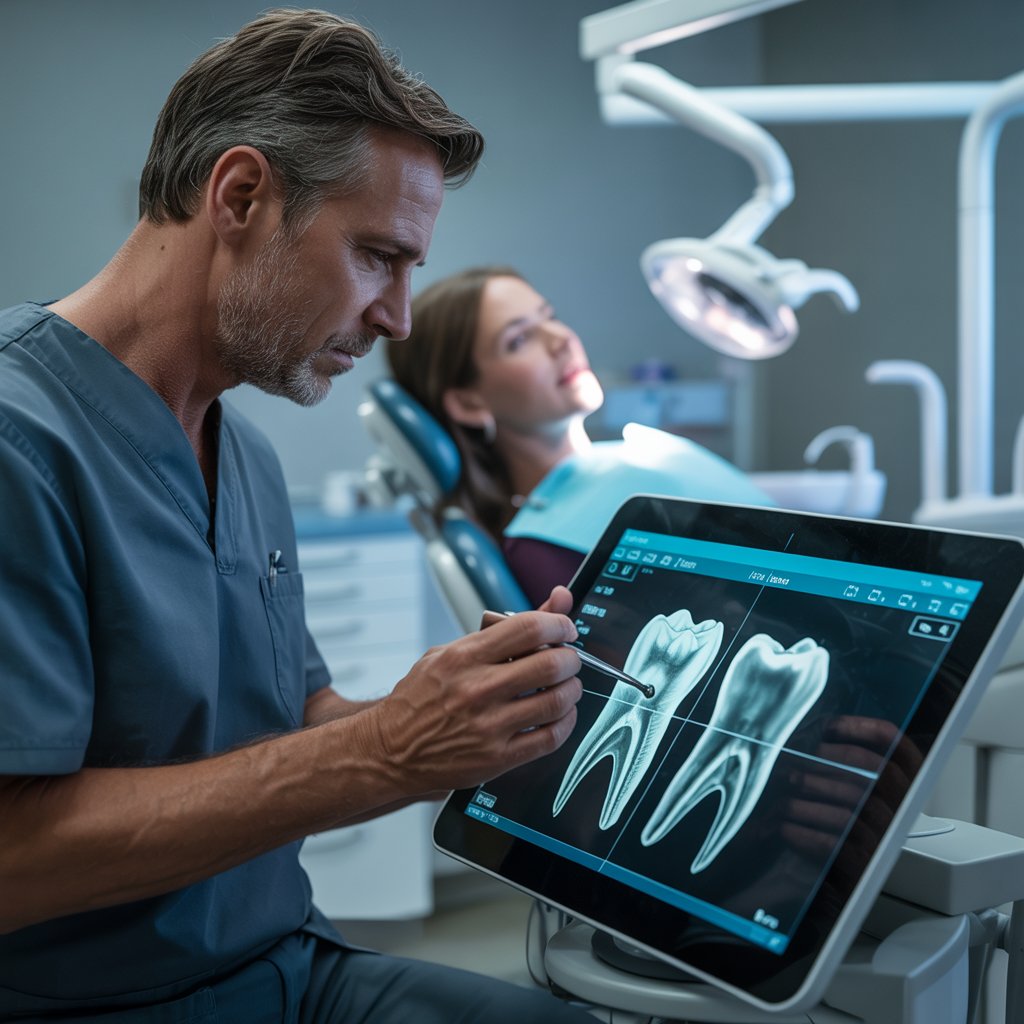
From there, the dentist examines the area, checks the bite, taps on teeth to identify inflammation around the roots, evaluates gum tissues, and takes x-rays as needed. In some offices, a 3D image may be used for more complex cases, though many emergencies can be diagnosed with standard dental imaging and a hands-on exam.
Treatment depends on the cause. If the problem is pressure inside an infected tooth, opening the tooth and beginning root canal therapy can provide significant relief. If the issue is an abscess in the gum, draining it may reduce pain and swelling quickly. If a crack has split the tooth beyond repair, extraction may be the most predictable option. If swelling around a wisdom tooth is the source, the immediate treatment may focus on cleaning the area, reducing inflammation, and planning next steps once the acute symptoms settle.
The patient experience varies. Some people walk in doubled over with pain and leave an hour later relieved enough to sleep for the first time in two nights. Others need a staged plan because the infection is advanced, the tooth is difficult to restore, or the swelling has spread into surrounding tissues. Good emergency care is not about promising the same fix for every case. It is about making sound decisions under pressure.
The role of antibiotics, and their limits
Antibiotics have a place in dental emergencies, but they are often misunderstood. If there is spreading infection, facial swelling, fever, or certain medical risk factors, antibiotics may be appropriate as part of treatment. They can help the body control bacterial spread. What they cannot do is remove a dead nerve, seal a crack, or drain trapped infection by themselves.
This matters because a patient may take antibiotics, feel somewhat better, and assume the problem is gone. Then the medication ends, the source remains, and the pain returns, sometimes worse than before. The temporary improvement can be misleading. Definitive dental treatment is what resolves the source.
There are also situations where antibiotics are not the first answer. A tooth with inflamed but uninfected pulp can produce severe pain without swelling, yet antibiotics would not address that. In those cases, the treatment is directed at the tooth itself, not the bloodstream.
Why timing affects whether a tooth can be saved
One of the most difficult conversations in emergency dentistry happens when someone waited too long and the treatment options are narrower than they were a week earlier. Teeth can often be saved with root canal therapy and a crown if the structure is still sound and the infection is manageable. But a tooth that is deeply fractured, badly decayed below the gumline, or surrounded by extensive bone loss may no longer be restorable.
This is where speed matters in a very practical way. Early treatment can mean the difference between a filling and a root canal, or between a root canal and an extraction. It can also affect your recovery. Smaller infections are usually easier to manage than larger ones, and localized swelling is simpler than swelling that has spread through facial spaces.
Patients sometimes worry that seeking emergency care means they are signing up for major treatment on the spot. Not necessarily. Sometimes the urgent visit is about stabilizing the problem, getting you out of pain, and deciding the next step with a clear head. But that first step still needs to happen.
Plano patients often need flexibility, not just speed
In a busy area like Plano, dental emergencies rarely arrive at a convenient time. Parents are juggling school pickups and activities. Professionals are trying to salvage a workday while one side of the face is pounding. New residents may not even have an established dental office yet. That is why the value of an Emergency dentist Plano, TX residents can reach quickly goes beyond same-day scheduling. It includes clear phone guidance, practical triage, and a team that knows how to move from intake to treatment without wasting time.
The best offices also understand that not every patient presents the same way. A healthy young adult with a sudden cracked molar needs one kind of response. An older adult on blood thinners with facial swelling needs another. A child with swelling near a primary tooth requires judgment that balances comfort, infection control, and long-term development. The details matter.
Pain control is important, but diagnosis comes first
It is natural to focus on stopping the pain. That is usually the first thing patients mention, and for good reason. Dental pain can be surprisingly intense. It can dominate your concentration, interfere with sleep, and make eating almost impossible. Still, pain control works best when it is tied to a diagnosis.
For example, a tooth with irreversible pulp inflammation may respond only briefly to medication because the pressure inside the tooth keeps building. Opening the tooth often relieves that pressure more effectively than another dose of pain medicine. A swollen gum abscess may ease dramatically once it is drained. A tooth that hurts only when biting may need the bite adjusted or the crack stabilized, not simply numbed.
This is one reason experienced clinicians ask detailed questions that can seem repetitive. They are trying to match the symptom pattern to the likely source. Is cold making it worse, or heat? Does the pain linger after the trigger is gone? Can you point to one tooth, or does the whole side hurt? Those answers shape treatment.
What recovery often looks like
After emergency treatment, recovery depends on what was done and how advanced the problem was. If pressure was relieved inside the tooth, many patients feel noticeable improvement within hours, though the area may remain sore to chewing for a few days. If an abscess was drained, the swelling may take a little longer to subside, especially if it had been building for several days before treatment.
A tooth that receives emergency root canal treatment may need a follow-up visit, depending on how the office handles urgent care and whether the case was fully completed the same day. If the tooth is extracted, aftercare focuses on clot protection, pain control, and watching for unusual swelling or persistent bleeding. If the issue involved gum infection or a wisdom tooth, hygiene measures and re-evaluation are often part of the plan.
The main thing patients should know is that “feeling better” and “fully healed” are not always the same stage. If your dentist recommends a return visit, a crown, or additional treatment, that is part of completing the job, not upselling. Temporary relief is not enough if the tooth is left structurally weak or vulnerable to reinfection.
A few warning signs people ignore too often
There are patterns that repeatedly show up in true emergencies. One is the patient who says the pain “used to come and go, but now it is constant.” Another is the person who says the tooth stopped hurting for a while, then the face started swelling. That second pattern can actually signal a dying or dead nerve with infection spreading outward. The pain changes, but the problem is not improving.
Another red flag is difficulty sleeping because of throbbing pain, especially if over the counter medications are barely helping. Night pain often reflects increased pressure and inflammation. Foul taste, pimple-like swelling on the gum, pain with biting, and visible facial asymmetry also deserve quick evaluation.
Children deserve special mention here. Kids may not describe symptoms clearly. Instead of saying “my lower molar is throbbing,” they may avoid chewing, become irritable, wake at night, or complain that their ear hurts. Facial swelling in a child should always be taken seriously.
Choosing the right emergency dental office
When pain and swelling hit, most people are not researching dentistry for fun. They want help now. Still, a few practical questions can help you choose well. Ask whether the office handles same-day emergencies, whether they can evaluate swelling promptly, and whether they perform common urgent procedures in-house. Find out what information they need from you when you call and whether they can advise if your symptoms sound more appropriate for hospital care.
An office that manages emergencies well usually sounds calm, specific, and organized on the phone. They ask about swelling, fever, trauma, medical history, and timing. They do not dismiss your symptoms, and they do not promise identical treatment before an exam. That kind of communication is a good sign.
If you are searching for an Emergency dentist Plano, TX families can rely on, responsiveness matters, but clinical judgment matters more. Severe toothaches and swelling require both.
The bottom line when your tooth is throbbing and your face is swelling
Dental emergencies have a way of shrinking your world. Meals become a chore. Sleep gets patchy. Work and family responsibilities keep moving while your attention narrows to one aching spot in your mouth. When swelling enters the picture, the need for action becomes more urgent.
Severe tooth pain is usually a signal that the problem has moved past the point of watchful waiting. Swelling suggests the body is actively reacting to it. At that stage, the smartest move is not to hope it passes or try random remedies from the internet. It is to get a professional evaluation quickly, identify the source, and treat it directly.
A qualified Emergency dentist Plano, TX patients can reach promptly can do more than dull the pain. The right care can stop the spread of infection, preserve a tooth when possible, and help you avoid a far more serious situation later. If the pain is intense, the swelling is obvious, or your symptoms are changing fast, trust that those signs matter. Acting Emergency dentist Plano, TX early is almost always easier than catching up later.
Vitality Dental
1220 Coit Rd # 106, Plano, TX 75075, United States
+1 972-645-4100
FAQ About Emergency dentist Plano, TX
Will the ER do anything for dental pain?
An emergency department can assess urgent symptoms and provide medical stabilization. Definitive treatment of the tooth usually requires a dentist. Seek emergency medical care for breathing or swallowing difficulty, uncontrolled bleeding, or serious facial injury.
What to do if I have a dental emergency in the middle of the night?
Contact a dentist or after-hours dental service promptly for guidance. If a permanent tooth is knocked out, keep it moist in milk while seeking immediate care. If symptoms suggest a medical emergency, go to an emergency department.
What qualifies as a dental emergency?
A knocked-out permanent tooth, severe or persistent tooth pain, a significant dental injury, or swelling may require urgent dental assessment. Call a dentist to describe the symptoms and determine timing. Uncontrolled bleeding or difficulty breathing or swallowing requires emergency medical care.